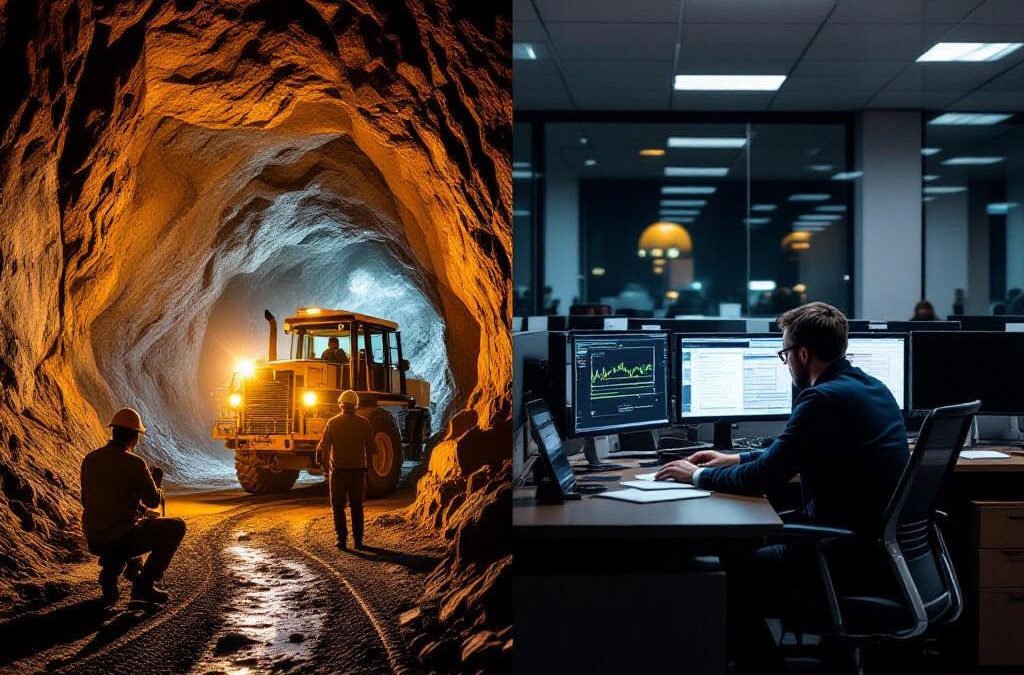
How do you do? I hope this finds you well and perhaps reflecting on the pressures of modern work life. Today, I’m diving into a topic close to my heart: mental health in high-stakes industries that drive our economies. Specifically, we’re exploring mining and banking, two vastly different sectors united by intense stress. Drawing from recent industry studies, I’ll unpack their unique mental health challenges and why generic solutions fall short. Grab a coffee, and let’s dive in.
The Toll of the Tunnels: Mental Health in Mining
Imagine working deep underground or at a remote site, enduring long shifts away from family, surrounded by the hum of machinery and the constant risk of accidents. It’s no surprise that mining takes a heavy toll on mental health. A 2023 South African study found that 29% of mine workers experience moderate to severe psychological distress, including anxiety, depression, PTSD, and burnout, with elevated suicide risks compared to other industries. In South Africa, 50% of miners report stress or anxiety, and 25% face common mental disorders.
What drives this? Gruelling schedules, family separation in fly-in-fly-out setups, job insecurity from market fluctuations, and traumatic events like cave-ins. Younger workers under 24 and women often feel it more keenly; women navigate gender biases and work-life challenges, while inexperienced youth face added life pressures. Alcohol misuse can exacerbate distress, potentially increasing its likelihood by up to five times (source needed). In male-dominated environments, stigma often makes admitting vulnerability feel like a weakness. If you know someone in the industry, this may resonate.
Behind the Desks: Mental Health in Banking
Now, shift to the sleek offices of banking, where pressure stems not from physical danger but from mental marathons. A 2024 financial industry survey reported that 62% of firms note spikes in stress, anxiety, and depression. Burnout affects 82% of employees at moderate to high levels, with 26% experiencing mild to severe stress. Depressive symptoms impact 32–40%, and anxiety affects nearly half.
The causes include long hours (often exceeding eight a day, which research shows doubles burnout risks), high-pressure decisions, economic uncertainties from mergers, and evolving roles that transform tellers into sales professionals. Women working overtime are particularly vulnerable, and low autonomy or unfair rewards amplify distress. Stigma persists, especially for juniors fearing career setbacks, leading to silent struggles. That end-of-day mental fog after a tough meeting? It’s the daily reality for many bankers.
Spotting the Differences: Why One Size Doesn’t Fit All
Mining and banking are high-pressure environments but comparing them is like chalk and cheese. Mining’s challenges arise from physical dangers and isolation, fostering trauma like PTSD, while banking’s stem from cognitive overload due to deadlines and client demands. Miners face adrenal exhaustion from erratic shifts, whereas bankers burn out from relentless mental demands. Culturally, mining’s “tough” ethos contrasts with banking’s competitive drive.
Generic programmes miss the mark because they ignore these distinctions: mining requires hazard-focused interventions, while banking needs flexible scheduling. Tailored solutions reduce absenteeism, boost productivity, and cut costs from turnover or claims. Without them, vulnerable groups (like young miners or overworked bankers) remain trapped in a cycle. It’s clear, isn’t it? Solutions must fit the problem, not the other way around.
Crafting Custom Fixes for Mining
How do we address mining’s challenges? It starts with tackling the realities. Robust policies to identify psychosocial risks, combined with supervisor training to reduce stigma, are key. South Africa’s Masoyise Health Programme, for example, integrates mental health into daily care with counselling and resilience tools. Encouraging team discussions, peer support, and stress-busting workshops (all with confidential access) makes a difference. Evidence shows that revamping schedules and training managers yields gains, though more studies are needed. The result? Safer workplaces, fewer sick days, and teams that stay longer.
Smart Strategies for Banking
In banking, the focus is on building mental resilience in a desk-driven world. Leaders should promote workshops or apps for tracking moods and cap working hours, as research confirms this reduces burnout. Employee assistance programmes with mindfulness or cognitive tools are effective. For instance, Barclays’ Mental Health Champions offer peer support, while HSBC’s hybrid work model, per a 2024 study, reduced stress by 21%. Creating safe spaces with anonymous feedback and fostering psychological capital (self-belief and optimism to weather challenges) enhances well-being. The outcome? Sharper focus, lower turnover, and a more vibrant workforce.
Conclusion
Prioritising mental health in these industries isn’t just compassionate; it’s strategic. Custom strategies address unique pressures, fostering resilient, thriving teams. What are your thoughts? Have you seen these challenges in your world? Share your insights or reach out; I’d love to hear from you. Until next time, take care of your brilliant mind.